






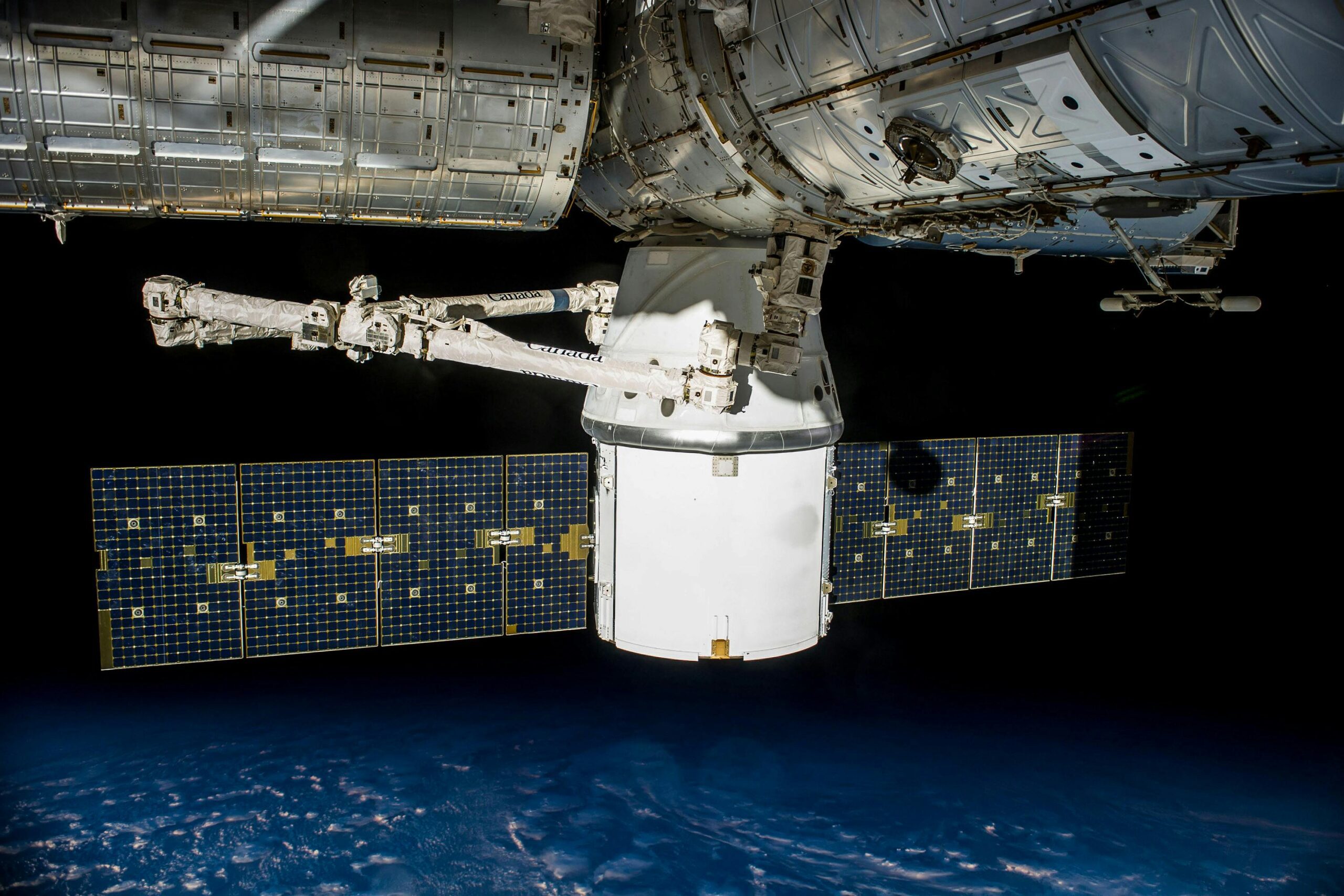
8 Essential Principles of Orbital Mechanics That Will Revolutionize Your Understanding
Orbital mechanics, often called space orbit physics, is a fascinating branch of astronomy and physics that governs the motion of objects in space. From satellites circling Earth to interplanetary spacecraft exploring our solar system, understanding the principles of orbital mechanics is essential for scientists, engineers, and anyone curious about the cosmos.
Whether you’re interested in satellite navigation, predicting the paths of celestial bodies, or simply understanding how the universe works, grasping the fundamentals of orbital motion and orbit dynamics will expand your perspective on space and physics. In this article, we explore 8 key principles of orbital mechanics that everyone should know, explained in an accessible and engaging way.
Understanding Orbital Mechanics
Before diving into the principles, it’s important to understand what orbital mechanics entails. At its core, it is the study of how objects move under the influence of gravitational forces. It combines space orbit physics, orbit dynamics, and mathematics to predict trajectories, velocities, and positions of objects in space.
The principles of orbital mechanics govern everything from launching satellites to navigating spacecraft. Even satellite navigation systems like GPS rely on these principles to calculate accurate positions and maintain proper orbits. By learning these principles, we gain insight into both practical applications and the natural laws shaping our universe.
1. Newton’s Law of Universal Gravitation
The foundation of orbital mechanics begins with Newton’s Law of Universal Gravitation. Every object with mass attracts every other object with mass. The gravitational force FF between two objects is defined by the equation:
F=Gm1m2r2F = G \frac{m_1 m_2}{r^2}
Where:
-
GG is the gravitational constant
-
m1m_1 and m2m_2 are the masses of the objects
-
rr is the distance between the centers of the two objects
This law explains why planets orbit stars and why moons orbit planets. Without gravity, orbital motion as we know it would not exist. Orbit dynamics are dictated by this invisible force, making it a cornerstone of space orbit physics.
2. Kepler’s Laws of Planetary Motion
Johannes Kepler formulated three laws that describe how planets move around the Sun, which are essential for understanding orbital mechanics:
-
The Law of Ellipses: Planets move in elliptical orbits with the Sun at one focus.
-
The Law of Equal Areas: A line connecting a planet to the Sun sweeps out equal areas during equal intervals of time.
-
The Law of Harmonies: The square of a planet’s orbital period is proportional to the cube of its average distance from the Sun.
These laws apply not only to planets but to all objects in orbit dynamics, including satellites and space stations. They help predict satellite navigation paths and are a critical part of space orbit physics calculations.
3. Conservation of Angular Momentum
Objects in orbit maintain their motion due to the conservation of angular momentum, a principle stating that unless acted on by an external torque, the angular momentum of an object remains constant.
For example, as a satellite moves closer to Earth, it speeds up to conserve angular momentum; when it moves farther away, it slows down. This principle is vital for orbital motion predictions, satellite navigation, and spacecraft maneuvers. Understanding orbit dynamics requires a solid grasp of how angular momentum influences trajectories.
4. Orbital Velocity and Escape Velocity
Every orbit has a specific orbital velocity, which is the speed an object must maintain to stay in a stable orbit. For a circular orbit around Earth, this velocity is about 7.8 km/s.
Escape velocity, on the other hand, is the speed needed to break free from a planet’s gravitational pull entirely. For Earth, it’s approximately 11.2 km/s. These concepts are crucial for space orbit physics, satellite navigation, and planning space missions. Knowing the correct velocity ensures stable orbital motion and prevents satellites from crashing or drifting off course.
5. Types of Orbits
Understanding the different types of orbits is fundamental in orbital mechanics:
-
Low Earth Orbit (LEO): Close to Earth, used by the International Space Station and many satellites.
-
Geostationary Orbit (GEO): Orbits Earth at the same rate as its rotation, ideal for communication satellites.
-
Polar Orbit: Passes over Earth’s poles, used for Earth observation and mapping.
-
Elliptical Orbits: Varying distances from Earth, used for specific mission profiles.
Each orbit type is governed by orbit dynamics and space orbit physics, and selecting the correct orbit is essential for satellite navigation and mission success.
6. Hohmann Transfer Orbits
The Hohmann transfer orbit is a method to move a spacecraft between two circular orbits using minimal fuel. It involves an elliptical transfer path and two engine burns: one to leave the initial orbit and another to enter the target orbit.
This principle is widely used in satellite navigation and interplanetary missions. Mastering orbital motion calculations for transfer orbits is crucial for fuel efficiency and accurate trajectory planning. Orbit dynamics experts rely on Hohmann transfers to optimize space missions.
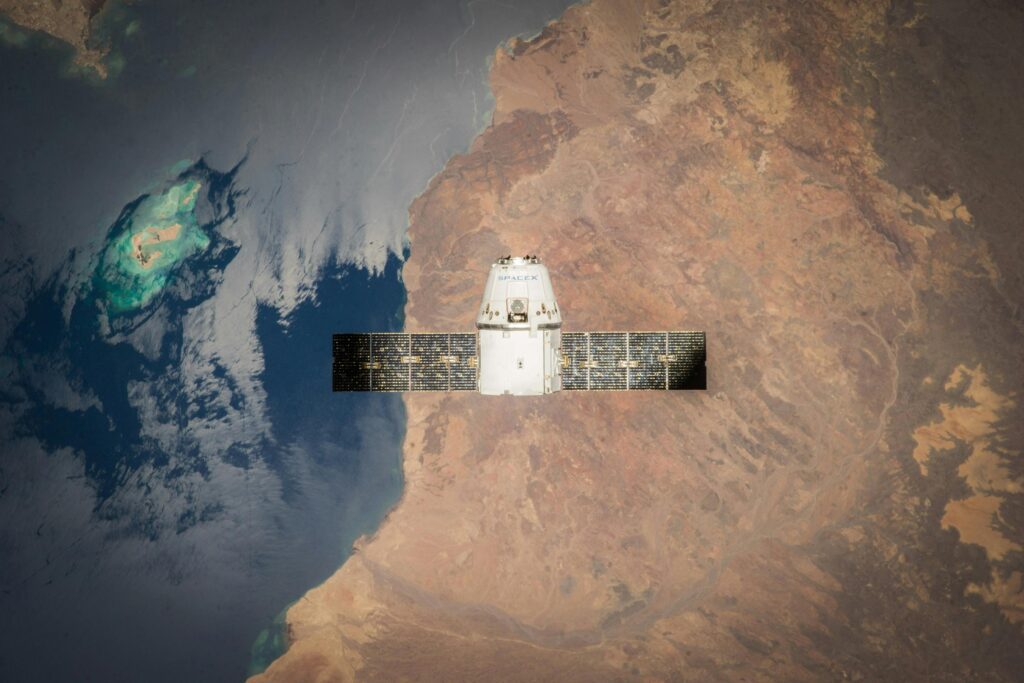
 7. Perturbations in Orbit
 7. Perturbations in Orbit
No orbit is perfectly stable due to perturbations—small forces that alter an object’s trajectory. These can be caused by:
-
Gravitational pull from other celestial bodies
-
Atmospheric drag in low orbits
-
Radiation pressure from the Sun
Accounting for perturbations is vital in satellite navigation to maintain precise positions. Principles of orbital mechanics teach us how to predict and correct these deviations to ensure accurate space orbit physics applications.
8. Orbital Resonance
Orbital resonance occurs when two orbiting bodies exert regular gravitational influence on each other, often leading to synchronized orbital periods.
A famous example is Jupiter’s moons Io, Europa, and Ganymede, which are locked in a 1:2:4 resonance. Understanding orbit dynamics and orbital motion in resonance conditions is critical for predicting long-term stability in planetary systems and planning satellite navigation strategies.
Applying Orbital Mechanics in Everyday Life
While these principles may seem abstract, they have direct applications in everyday life:
-
Satellite Navigation: GPS and communication satellites rely on precise space orbit physics.
-
Space Exploration: Missions to Mars or the Moon use principles of orbital mechanics to reach targets efficiently.
-
Weather Forecasting: Satellites in specific orbits provide vital meteorological data.
-
Global Communication: Geostationary satellites depend on accurate orbital motion calculations.
-
Scientific Research: Observing planets, stars, and asteroids relies on understanding orbit dynamics.
By grasping these principles of orbital mechanics, we appreciate the complexity and precision behind modern technology and space exploration.
Final Thoughts
The 8 key principles of orbital mechanics—from Newton’s gravity to orbital resonance—form the backbone of space orbit physics. Whether it’s launching a satellite, navigating a spacecraft, or understanding celestial mechanics, these principles govern every aspect of orbital motion.
By studying orbit dynamics, mastering satellite navigation, and applying principles of orbital mechanics, we gain a deeper understanding of the universe. These concepts remind us that space is governed by predictable laws, and understanding them allows humanity to explore, innovate, and reach new heights.
FAQs: Orbital Mechanics and Space Orbit Physics
1. What is orbital mechanics?
Orbital mechanics is the study of the motion of objects in space under the influence of gravitational forces, encompassing orbit dynamics and space orbit physics.
2. Why is orbital velocity important?
Orbital velocity ensures a satellite stays in a stable orbit. If too slow, it falls back to Earth; if too fast, it may escape Earth’s gravity.
3. What are the main types of orbits?
Common orbits include Low Earth Orbit (LEO), Geostationary Orbit (GEO), Polar Orbits, and Elliptical Orbits, each serving different purposes in satellite navigation.
4. What is a Hohmann transfer orbit?
A Hohmann transfer orbit is an efficient path for moving a spacecraft between two circular orbits, minimizing fuel usage and maximizing precision.
5. How do perturbations affect satellites?
Perturbations like gravitational forces from other bodies and atmospheric drag can alter orbital motion, requiring adjustments in satellite navigation.
